White or red? The question is not about wine but meat. A large number of studies show the harm of excessive consumption of red meat. This question is complicated, and there are several hypotheses why it is harmful: the concentration of TMAO (trimethylamine N-oxide), N-nitroso-containing compounds, heme iron and its effect, the harm of heterocyclic amines, the immune response to N-acetyl muramic acid (Neu5Ac), etc. In any case, processed meat (sausages, bacon, sausage, etc.) is several times more harmful than the whole. And if you cook it wisely and gently, protect it with spices — it’s even better.
For example, it has been shown that all 25 grams of processed meat per day (sausages, bacon, sausage) are enough to increase the risk of dementia by 44% (Alzheimer’s risk by 52%). Is meat so harmful? Are we removing it entirely and forever? The same study found that 50 grams of unprocessed meat per day are associated with a 19% reduction in the risk of dementia (30% risk of Alzheimer’s). However, frequent consumption of whole meat also increases health risks.
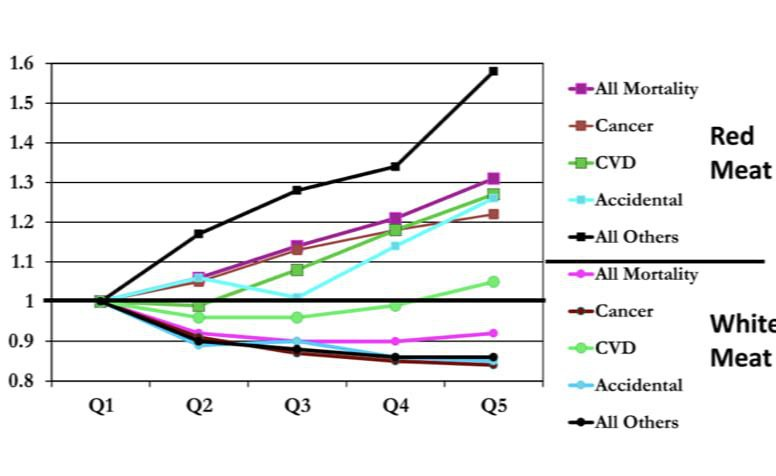
If not red, then white (poultry). White meat compares favorably with red meat — its consumption is associated with a reduced risk of obesity, cardiovascular diseases, and type II diabetes. For example, for coronary heart disease — processed meat increases the risk by 18%, whole meat by 9%, and poultry does not increase at all. White meat has a neutral or protective effect on cancer risk. However, too fatty or processed white meat from fast food does not have these properties and negatively affects the lipid profile.
Meta-analysis has shown an inverse relationship between the consumption of white meat and mortality from all causes. Giving up processed red meat, replacing it with whole meat, and replacing it with poultry, fish, and vegetable protein sources (legumes, nuts) is a helpful change in nutrition.
White
Meat Consumption, All-Cause Mortality, and Cardiovascular Events: A
Meta-Analysis of Prospective Cohort Studies Nutrients 2021 Feb
20;13(2):676.
Beneficial Effects of Poultry Meat Consumption on Cardiovascular Health and the Prevention of Childhood Obesity
Food
Nutr Res. 2015; 59: 10.3402/fnr.v59.27606.Role of poultry meat in a
balanced diet aimed at maintaining health and wellbeing: an Italian
consensus document
Meat consumption and risk of ischemic heart
disease: A systematic review and meta-analysis Critical Reviews in Food
Science and Nutrition